Moving from hand cutting to a mechanized cutting system is much like replacing a hand drill with a power drill. The operator still controls the process, but the equipment delivers greater precision, consistency, and productivity with far less effort. For fabricators facing tighter schedules and higher quality expectations, that transition can have a measurable impact on daily operations.
If you’re evaluating your first mechanized system or looking to upgrade an aging setup, understanding the available options is the first step toward making the right investment. This guide outlines the key factors to consider and explains how different cutting solutions fit different fabrication environments.
What Is a Mechanized Cutting System?
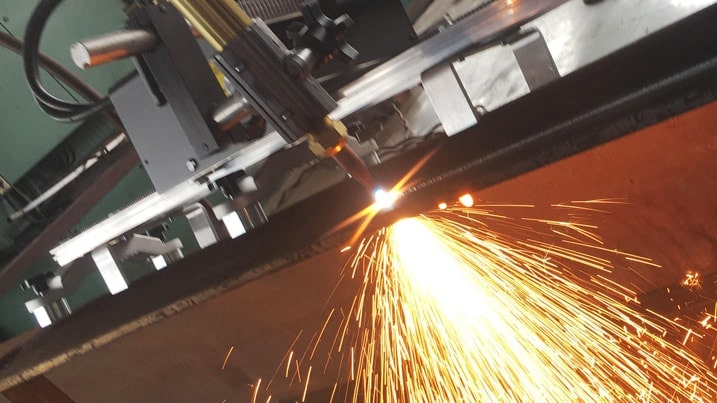
A mechanized cutting system bridges the gap between fully manual cutting and large-scale automated equipment. Instead of guiding a torch entirely by hand, the operator mounts it on a motorized carriage that travels along a controlled path at a preset speed.
This approach combines operator oversight with consistent machine movement, making it easier to produce repeatable, high-quality cuts while reducing the variability that often comes with manual operation.
Depending on the application, these systems can perform:
- Straight-line cutting
- Bevel cutting
- Plasma gouging
- Profile and shape cutting
Many modern systems also support multiple cutting processes, giving fabricators greater flexibility as production needs change.
Why Fabricators Move From Hand Cutting to Mechanization
The decision to mechanize is rarely about replacing skilled operators. Instead, it’s about giving those operators tools that improve efficiency and repeatability throughout the fabrication process.
Consistent travel speed and torch positioning help produce cleaner cuts with fewer imperfections. That often means less grinding, reduced rework, and more predictable fit-up during downstream fabrication.
Mechanization also improves workflow in practical ways. Rather than transporting heavy plate to a stationary cutting table, many portable systems bring the equipment directly to the workpiece. This reduces material handling while making it easier to work on large assemblies or components already in place.
Other common advantages include:
- Reduced operator fatigue during long cutting cycles
- Improved safety by allowing operators to monitor rather than manually guide every cut
- Higher throughput with uninterrupted, repeatable cutting performance
- More consistent production across multiple shifts and operators
For shops balancing quality expectations with labor constraints, these improvements can quickly translate into greater productivity.
Key Factors to Evaluate Before You Buy
Not every industrial cutting machine is designed for the same type of work. Before investing, it’s worth evaluating how the equipment will fit your production requirements.
1. Cutting Process
Start with the cutting process your operation relies on most.
Oxy-fuel cutting mechanization remains an excellent choice for thicker carbon steel applications, while plasma systems typically provide faster cutting speeds and cleaner edges on a wider range of material thicknesses. Some machines also support plasma gouging for weld removal and surface preparation.
If your production involves multiple processes, choosing equipment that accommodates more than one can provide greater long-term flexibility.
2. Type of Cutting Required
The geometry of your workpieces also influences equipment selection.
Simple, straight seams often require a different solution than repetitive bevel preparation or complex profile cutting. Shops producing a variety of components may benefit from modular equipment that adapts to changing applications without requiring multiple dedicated machines.
3. Rail Systems and Portability
Once you’ve identified the cutting process, consider where the equipment will be used.
Rigid rails provide excellent stability for long, straight cuts, while semi-flexible rails make it easier to follow large-radius curves. Depending on the material being cut, magnetic mounting systems work well on ferrous materials, while vacuum-mounted systems expand capabilities for non-ferrous applications.
Portable equipment can also reduce setup time by bringing the machine directly to large structures instead of moving oversized workpieces through the shop.
4. Drive System and Repeatability
Consistent motion is one of the primary advantages of mechanization.
Features such as positive rack-and-pinion drives, dynamic braking, and adjustable travel speed help maintain repeatable cutting performance from one part to the next. These characteristics become especially valuable in production work where maintaining dimensional consistency is critical.
5. Shop Layout and Work Environment
Finally, consider how the equipment fits your workspace.
Confined fabrication areas, field work, off-table cutting, and oversized assemblies all influence which machine configuration offers the best combination of mobility and productivity.
Comparing Bug-O Mechanized Cutting Solutions
Because fabrication requirements vary widely, Bug-O offers several equipment platforms designed to address different production challenges.
Portable Track Cutting Machines: DC-IV
A straight-line track cutting machine like the DC-IV provides repeatable cuts and bevels. This dual-speed range machine offers different attachments and accessories for mounting to fit many types of applications.
GO-FER IV Portable Track Burner
For shops seeking economical versatility, the GO-FER IV functions as a multi-purpose plasma cutting tractor capable of oxy-fuel cutting, plasma cutting, and gouging. It can operate in virtually any position and can be equipped with a radius attachment for circle cutting, making it well suited for a broad range of fabrication tasks.
Modular Drive System (MDS)
The Modular Drive System offers maximum flexibility through interchangeable components that support all position cutting, shape cutting, stitching, gouging, and additional specialized applications. Rather than purchasing separate machines for every process, fabricators can configure one platform to perform multiple jobs.
Custom and Specialty Cutting Systems
Some projects require equipment beyond standard production machines. For specialty applications involving beams, channels, angles, pipe profiles, or other unique geometries, custom-engineered cutting solutions can improve both productivity and cut quality while fitting specific production requirements.
Matching the Right System to Your Industry
Choosing the right equipment often comes down to the type of work your business performs every day. For instance:
- Shipbuilding often benefits from portable systems capable of handling large plates and complex cutting paths.
- Tank fabrication frequently requires accurate straight-line and bevel cutting for shell sections.
- Structural steel fabricators value portability for processing beams, plates, and assemblies throughout the shop.
- General plate fabrication often benefits from versatile systems that support multiple cutting processes and changing production schedules.
Matching equipment capabilities to your typical workload helps maximize both utilization and long-term return on investment.
Can One Machine Handle Both Cutting and Welding?
In many fabrication environments, the answer is yes.
Several Bug-O platforms, including the GO-FER IV and Modular Drive System, support both cutting and welding applications through interchangeable components and accessories. For fabricators looking to standardize equipment across multiple operations, this versatility can reduce capital investment while expanding production capabilities.
If your workflow includes both cutting and welding, evaluating systems that support both processes can simplify equipment management and improve overall shop efficiency.
Find the Right Mechanized Cutting Solution for Your Operation
The right mechanized cutting system depends on more than the cutting process alone. Material type, plate thickness, joint preparation, shop layout, production volume, and future growth all play a role in selecting the best solution.
At Bug-O Systems, we work with fabricators to match equipment to real production requirements, not just equipment specifications. Whether you’re evaluating your first portable cutting system or expanding an existing operation, our team can recommend a solution tailored to your application, helping you improve productivity, consistency, and long-term performance.
Recent Comments