Proper pipe end preparation is essential for producing strong, reliable welds across industrial fabrication, construction, and pipeline projects. A pipe cutting and beveling machine allows operators to complete accurate cuts and consistent bevels with greater efficiency than manual methods. Whether you’re selecting a pipe beveling machine for shop production or field applications, understanding the available technologies helps improve weld quality, reduce preparation time, and support consistent fabrication results. This guide explains how mechanized systems work, the different machine types available, and the key factors to consider before investing in pipe preparation equipment. For facilities seeking advanced mechanized cutting solutions, modern mechanized systems provide greater precision and repeatability.
What Is a Pipe Beveling Machine?
A pipe beveling machine is specialized equipment designed to prepare pipe ends before welding by creating precise bevel profiles while maintaining dimensional accuracy. Unlike manual grinding or torch cutting, mechanized equipment delivers repeatable results that improve joint fit-up and welding consistency. Depending on the application, a pipe bevel machine may perform beveling alone or combine cutting and beveling into a single operation.
Cutting and Beveling in a Single Operation
Many modern systems perform pipe cutting and beveling simultaneously, eliminating multiple setup stages. Combining both operations increases productivity, reduces handling time, and produces uniform weld preparation while minimizing material waste.
Key Components of a Mechanized System
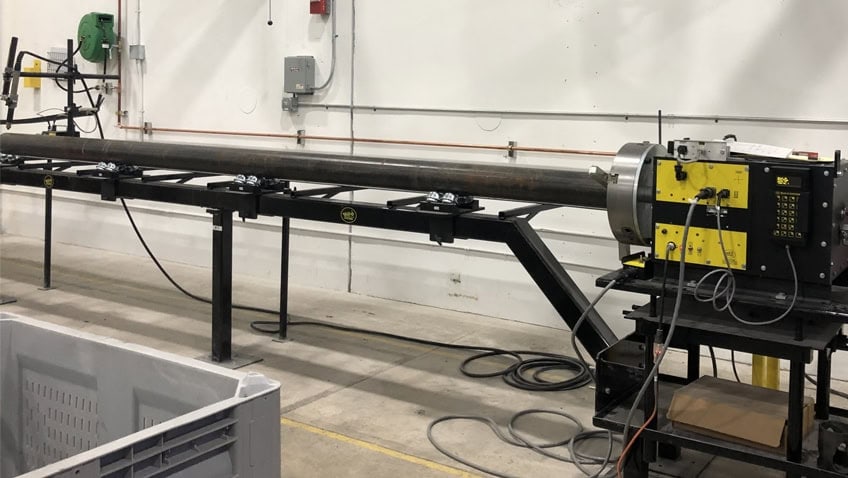
Most mechanized cutting and beveling machines include a rigid drive system, precision guidance components, adjustable torch or cutting head, speed controls, clamping mechanisms, and operator controls. Together, these components provide stable, repeatable movement that supports accurate pipe preparation across varying diameters.
Why Pipe End Preparation Matters for Weld Quality
Proper preparation directly affects weld penetration, joint strength, and inspection results. Pipe end preparation machines create consistent surfaces that help welders achieve proper fusion while reducing defects caused by inconsistent fit-up. Investing in quality end preparation pipe equipment improves weld prep efficiency, minimizes rework, and supports compliance with fabrication standards.
Understanding Bevel Angles
The bevel angle determines how weld metal penetrates the joint and influences the amount of filler material required. Selecting the correct angle of bevel depends on material thickness, welding process, applicable codes, and project specifications to ensure proper weld strength and accessibility.
Common Bevel Types (V, J, and Compound)
Different applications require different bevel geometries. Standard V-grooves are commonly used across fabrication, while a J bevel reduces filler metal requirements on thicker materials. A properly machined J bevel pipe also improves welding efficiency without sacrificing joint integrity. Compound bevels may be specified for demanding industrial applications.
Handling Out-of-Round Pipe
Preparing out of round pipe presents additional challenges because inconsistent diameters can affect alignment and weld quality. Mechanized equipment with precise clamping and guidance systems helps maintain consistent bevel geometry despite minor dimensional variations.
Types of Pipe Cutting and Beveling Machines
Selecting the right pipe cutting and beveling machine depends on production volume, pipe size, material type, and jobsite conditions. Today’s pipe cutting and beveling machines are available in multiple configurations designed for fabrication shops, industrial plants, and field construction. Choosing the appropriate pipe cutting beveling machine improves productivity while maintaining preparation accuracy.
Portable vs. Stationary Systems
Portable machines provide flexibility for field welding, maintenance, and large-diameter installations where moving the workpiece is impractical. Stationary systems are ideal for high-volume manufacturing environments that require continuous production, maximum repeatability, and automated workflows.
Cold Cutting vs. Thermal Methods
Cold cutting minimizes heat input and preserves material properties, making it ideal for many industrial applications. Thermal methods, including oxy fuel cutting and plasma cutting, remain effective for specific materials and production requirements where heat-affected zones are acceptable.
How to Choose the Right Pipe Beveling Machine
Choosing between available pipe beveling machines requires evaluating the specific demands of your operation. Production goals, material characteristics, and required weld quality all influence the best equipment selection.
Pipe Diameter and Wall Thickness
Machine capacity should accommodate the full range of pipe diameters and wall thicknesses used in your operation. Proper sizing ensures accurate cutting, stable machine performance, and efficient production.
Material Considerations
Carbon steel, stainless steel, alloy materials, and specialty metals require different cutting parameters and tooling configurations. Selecting equipment designed for your material improves cut quality, extends tool life, and supports consistent preparation.
Precision and Repeatability
Repeatable performance is essential for reducing rework and maintaining consistent weld quality. Mechanized systems that deliver accurate travel speed, stable torch positioning, and reliable guidance produce uniform results across repeated production cycles.
Mechanized Pipe Cutting and Beveling with Bug-O Systems
BUG-O Systems designs portable mechanized solutions that improve the efficiency, accuracy, and consistency of industrial pipe preparation. Their equipment supports demanding fabrication environments by delivering repeatable cutting and beveling performance while reducing manual effort and improving productivity. Learn more about BUG-O’s pipe cutting and end preparation solutions to determine which mechanized system best fits your application.
Frequently Asked Questions
What bevel angle is standard for pipe welding?
The standard bevel angle varies depending on material thickness, welding process, and applicable industry codes. Many pipe welding applications commonly use bevels around 37.5 degrees, although project specifications should always determine the required joint preparation.
What is the difference between cold and thermal pipe cutting?
Cold cutting removes material without creating significant heat, helping preserve the material’s mechanical properties. Thermal cutting uses heat to separate material and is often selected for applications where production speed or material type makes it appropriate.
Can one machine both cut and bevel a pipe?
Yes. Many modern mechanized systems combine cutting and beveling into a single operation, allowing operators to prepare pipe ends more efficiently while maintaining consistent bevel geometry and reducing overall production time.
Prepare Pipe Ends with Greater Precision
High-quality pipe preparation begins with equipment designed for accuracy, consistency, and productivity. Whether you’re upgrading fabrication capabilities or improving field operations, BUG-O Systems offers mechanized solutions engineered to support reliable cutting and beveling performance across demanding industrial applications. Explore the right equipment for your operation or Contact Us to discuss your pipe preparation requirements with the BUG-O Systems team.
Recent Comments